
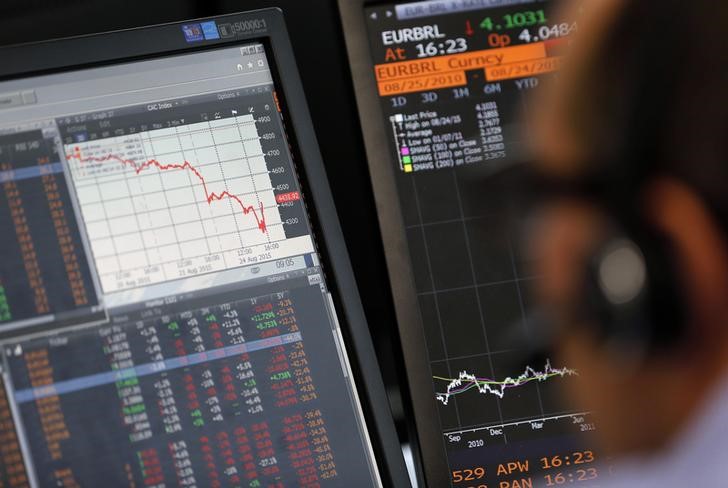
Global markets remain on edge as the S&P 500 continues to experience steep declines amid rising geopolitical and economic uncertainty. In a recent report, UBS issued a strong warning: if the benchmark index drops another 5% to 10%, the Federal Reserve may be forced to step in with an interest rate cut to stabilize financial conditions.
A Market Under Pressure
The S&P 500 has already been under heavy pressure in recent weeks due to a combination of persistent inflation, cooling economic data, and renewed global trade tensions—particularly between the U.S. and China. The added weight of high interest rates and softening corporate earnings has created a perfect storm, triggering increased volatility and investor anxiety.
UBS strategists emphasized that a deeper correction in the stock market could raise alarm bells at the Fed. They noted that while the Fed has so far maintained a hawkish stance due to sticky inflation, a sharp equity selloff could shift the balance of risks and force policymakers to prioritize financial stability over inflation control.
How Far Could It Fall?
UBS isn’t alone in its caution. Morgan Stanley has also suggested that the S&P 500 could fall an additional 7%–8% if macroeconomic conditions fail to improve. They pointed to weakening manufacturing data, slowing job growth, and lowered consumer confidence as key indicators that the U.S. economy might be losing momentum.
Goldman Sachs, meanwhile, recently raised the probability of a U.S. recession to 45%, citing tightening credit conditions and geopolitical instability. JPMorgan also warned that prolonged market declines could have spillover effects into consumer behavior and business investment, reinforcing a downturn.
What Will the Fed Do?
The Federal Reserve has so far resisted calls to cut interest rates, focusing instead on its dual mandate of price stability and maximum employment. But according to UBS, a sustained market drop could force the Fed to pivot. If the S&P 500 were to decline by 10% or more from its recent highs, it could lead to tighter financial conditions—effectively doing some of the Fed’s job in slowing the economy. In such a scenario, the Fed might intervene to prevent over-tightening.
Fed Chair Jerome Powell has acknowledged that the central bank is closely monitoring financial markets, and while he maintains that inflation is still too high, he has also opened the door to potential adjustments should economic conditions deteriorate sharply.
Investor Sentiment and Strategy
Despite the turbulence, some investors remain optimistic that any policy pivot by the Fed could stabilize markets. However, many are adopting a more defensive stance—favoring sectors like utilities, consumer staples, and healthcare, while reducing exposure to high-growth tech stocks that are particularly sensitive to rate hikes.
UBS also noted that any signs of Fed dovishness, such as a surprise rate cut or a pause in further hikes, could act as a short-term catalyst for market recovery. Yet, they warned that without clear improvement in economic fundamentals, any rally could prove short-lived.
Conclusion
The next few weeks could be critical. If the S&P 500 continues its downward trajectory and falls another 5% to 10%, as UBS projects, it may push the Federal Reserve to shift its policy stance. Whether that happens will depend on how quickly inflation cools, how resilient the labor market remains, and how deeply investor confidence erodes.
For now, traders and analysts alike are watching both Wall Street and Washington for signs of the next big move.


