
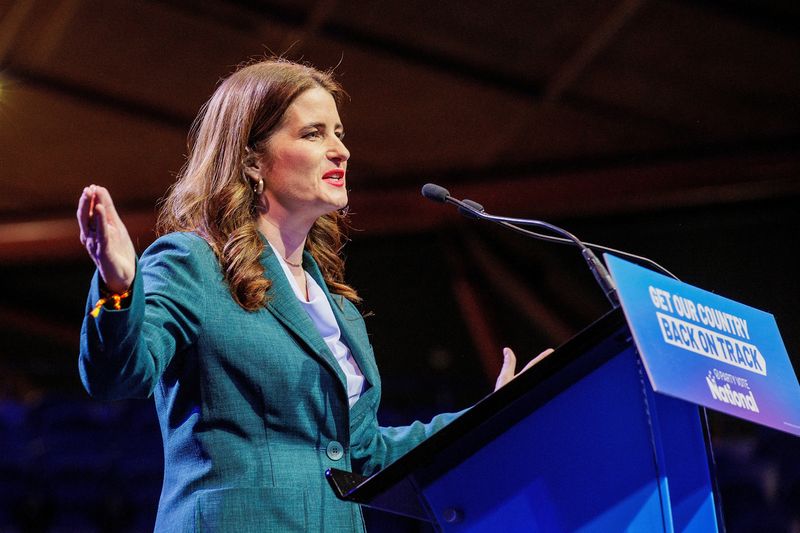
In the face of mounting global uncertainty caused by renewed protectionist policies from the United States, New Zealand has announced it will maintain its current economic and fiscal strategies. This decision comes after U.S. President Donald Trump approved a 10% tariff on New Zealand goods as part of a broader push to protect American industries.
Despite concerns from exporters and economists, New Zealand Finance Minister Nicola Willis stated that the country would not engage in a tit-for-tat trade war and remains committed to its long-term economic framework. “New Zealand has weathered global disruptions before,” she said. “We will continue to focus on economic resilience, prudent budgeting, and supporting sectors that drive innovation and productivity.”
A Key Trade Partner at Risk
The United States is New Zealand’s second-largest export destination, accounting for roughly 12% of total exports in 2024. Key sectors such as dairy, meat, wine, and fresh produce are expected to be most affected by the new tariffs. While the immediate impact is difficult to quantify, analysts warn that higher prices could make New Zealand exports less competitive in the U.S. market, potentially reducing demand and pressuring margins for producers.
However, the government remains optimistic. “We’ve already taken steps to diversify our trading partners and strengthen supply chains,” said Willis. “Although the tariffs are disappointing, they do not represent a threat we cannot manage. Our economy is agile and supported by strong fundamentals.”
Budget Discipline Amid Global Headwinds
Minister Willis reiterated the government’s goal of achieving a budget surplus by the end of the decade. She noted that the upcoming national budget will incorporate conservative projections in light of trade uncertainty and inflation pressures.
While some political commentators called for stimulus measures to offset possible export losses, Willis maintained that disciplined fiscal management remains the best course forward. “Throwing money around in reaction to short-term shocks is not a sustainable policy. What we need is a smart, long-term strategy,” she said.
In response to the external pressures, the Reserve Bank of New Zealand (RBNZ) is expected to lower its official cash rate to 3.50% at the next policy meeting. This move would aim to stimulate domestic demand and provide relief to households and businesses. Economists suggest that if trade conditions worsen or global growth slows further, additional rate cuts may follow.
Calls for Diplomacy Over Retaliation
Rather than escalating trade tensions, New Zealand has chosen to pursue a diplomatic approach. In December 2024, officials urged Washington to reconsider the tariff move, emphasizing the balanced nature of the trade relationship between the two countries.
“New Zealand exports high-quality agricultural products to the U.S., and in return, we import American machinery, technology, and consumer goods. It’s a mutually beneficial relationship that should be protected, not undermined,” Willis said.
Many in the business community agree. “The last thing exporters want is a trade war,” said James Hunter, CEO of a leading dairy cooperative. “We need our government to stay calm and focus on negotiation rather than retaliation.”
Economic Resilience Remains the Focus
Despite rising fears of a global slowdown, New Zealand’s economic fundamentals remain relatively strong. The country continues to enjoy low unemployment, a robust tech sector, and a reputation for political and regulatory stability — all of which contribute to investor confidence.
Additionally, New Zealand’s efforts to strengthen trade ties with countries in Asia and Europe could help offset any long-term losses from reduced access to the U.S. market. Ongoing talks with the European Union and further integration into the Comprehensive and Progressive Agreement for Trans-Pacific Partnership (CPTPP) are part of this strategy.
Conclusion
While the new U.S. tariffs pose a challenge to New Zealand’s export-dependent economy, the government’s measured and strategic response reflects a broader commitment to stability and resilience. Rather than retaliate or shift course under pressure, New Zealand is doubling down on prudent fiscal management, diversified trade relationships, and open dialogue with its international partners.
As global markets brace for further economic turbulence, New Zealand appears determined to stay the course — proving once again that small economies can remain steady even in stormy geopolitical seas.


