
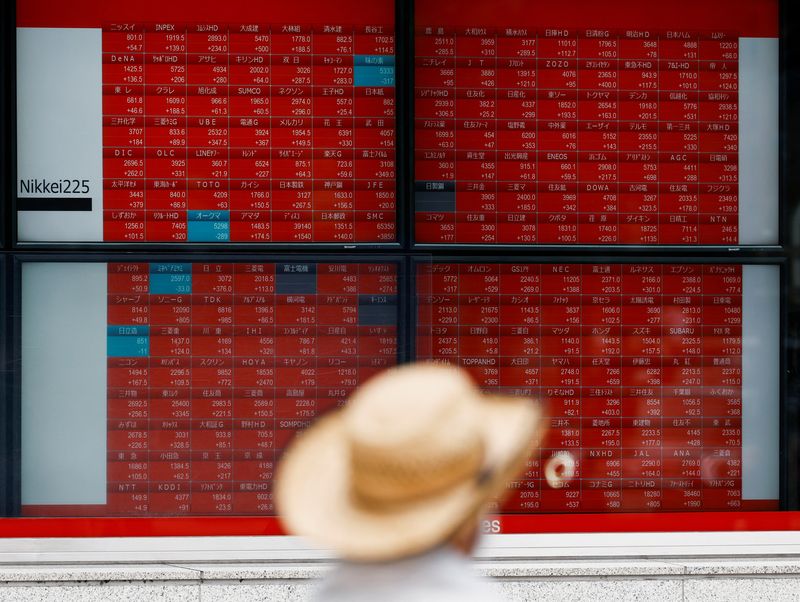
Asian equity markets staged a notable recovery on Tuesday, with Japan taking the lead in a broad regional bounce. The rebound comes amid growing optimism that tensions surrounding global trade may ease in the near future, following signs of potential negotiation efforts between the United States and its trading partners — particularly Japan.
Japanese Equities Surge on Trade Diplomacy Signals
Japan’s Nikkei 225 index rallied 5.6%, marking its strongest single-day performance in months, after suffering a sharp 7.8% drop the previous day. The recovery was fueled by comments from U.S. Treasury Secretary Scott Bessent, who emphasized that Japan would be a key priority in the United States’ upcoming trade discussions. Investors interpreted the remarks as a softening stance from Washington and a potential opening for diplomatic resolution rather than escalation.
Tokyo’s gains were further supported by a rally in export-heavy sectors such as automobiles, electronics, and industrials — all of which had been under intense pressure due to concerns over tariffs and global supply chain disruptions.
Mixed Picture Across Asia
Elsewhere in Asia, performance was mixed but leaned positively. In China, the CSI 300 index — which tracks the largest stocks on the Shanghai and Shenzhen exchanges — rose by 1%, while the Shanghai Composite advanced 0.9%. The gains followed massive losses in the previous session, with indexes plunging more than 7% amid fears of a deepening U.S.-China trade conflict.
Traders in China credited the rebound to state-backed funds entering the market to stabilize sentiment and absorb selling pressure. State-owned banks were also reported to have intervened in the foreign exchange market to support the yuan, adding to confidence.
However, not all markets shared in the recovery. Taiwan, Thailand, and Indonesia continued to register losses as investor sentiment remained cautious and capital outflows persisted. Analysts cited political uncertainties and inflation risks in some of these economies as contributing factors.
U.S. Futures Rise on Hopes of Trade Progress
Back in the United States, equity futures pointed to a higher open for Wall Street. Dow Jones Industrial Average futures rose nearly 0.8%, while Nasdaq and S&P 500 futures also posted solid gains in early trading.
Investors were encouraged by the possibility that the U.S. might adopt a more diplomatic approach toward its trade policies, at least with key allies such as Japan. The fact that U.S. Treasury officials are initiating talks rather than expanding tariffs immediately was seen as a positive signal by markets.
However, analysts warn that despite the initial optimism, the trade outlook remains murky. The broader U.S.-China trade war continues to hang over markets, with no definitive signs of de-escalation on that front.
Bond Yields and Currency Markets Reflect Shifting Sentiment
Alongside the equity rally, government bond yields moved higher, suggesting that risk appetite is returning — at least temporarily. U.S. 10-year Treasury yields rose to 3.68%, recovering from recent lows, as investors rotated out of safe-haven assets and back into stocks.
Currency markets also reflected the shifting sentiment. The U.S. dollar strengthened against the Japanese yen, moving to 147.58 from 145.59 the previous day. The yen’s weakness is typically a bullish signal for Japanese equities, as it improves the profit outlook for exporters.
Caution Remains as Volatility Stays High
Despite Tuesday’s rebound, market volatility remains elevated. The CBOE Volatility Index (VIX), often referred to as the “fear gauge,” remains above 60 — far higher than its long-term average. This indicates that investors are still wary and that markets could swing sharply in either direction.
Analysts continue to caution that recent gains may be fragile, given the unresolved trade disputes, especially between the U.S. and China, as well as broader concerns over slowing global growth, inflationary pressures, and interest rate uncertainties.
Conclusion
While Japan’s leadership in the Asian equity recovery offers a glimmer of hope, the market’s overall outlook remains uncertain. Investors are advised to stay cautious and closely watch developments in U.S.-Asia trade relations, central bank signals, and macroeconomic data that may shape global sentiment in the coming weeks.


